Why You Can't See Hail Damage From the Ground
After a hailstorm rolls through Fort Bend County, most homeowners do exactly what you'd expect: stand in the driveway, look up, and conclude the roof looks fine. Most of the time, that conclusion is wrong.
Hail rarely punches holes in a roof the way people imagine. What it does is bruise the shingles — the impact knocks the protective granules off the asphalt mat and compresses the fiberglass underneath. From the ground, a bruised shingle looks identical to a healthy one. Up close, you can feel the soft spot with your thumb and see the dark circle where the granules are gone. That exposed mat then bakes in the Texas sun, dries out, cracks, and years later becomes the leak that “came out of nowhere.”
This is why the most dangerous hail damage is the kind nobody notices. The roof doesn't leak on day one. It just quietly starts aging faster.
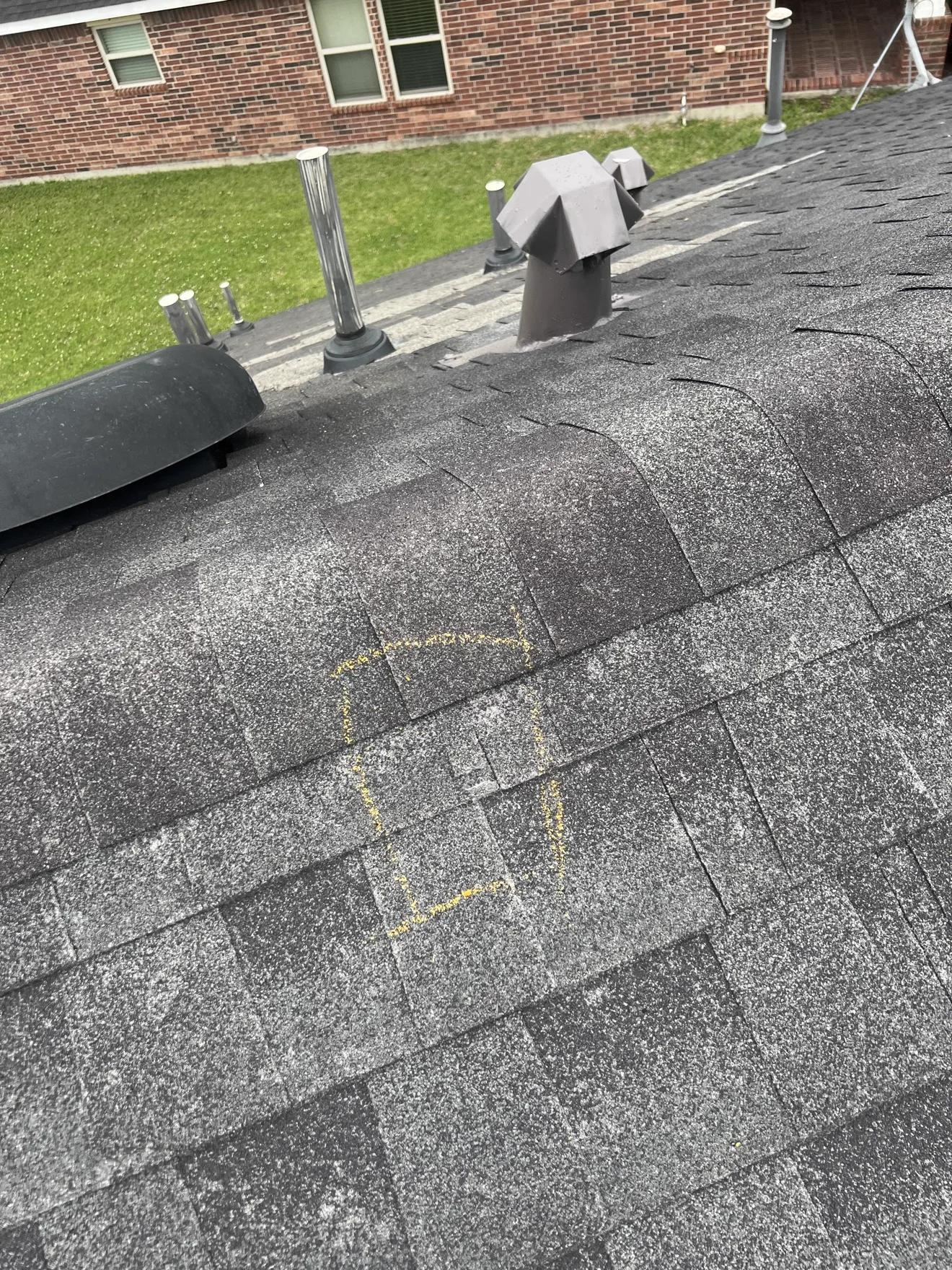
Chalk-marked damage documented during an inspection.
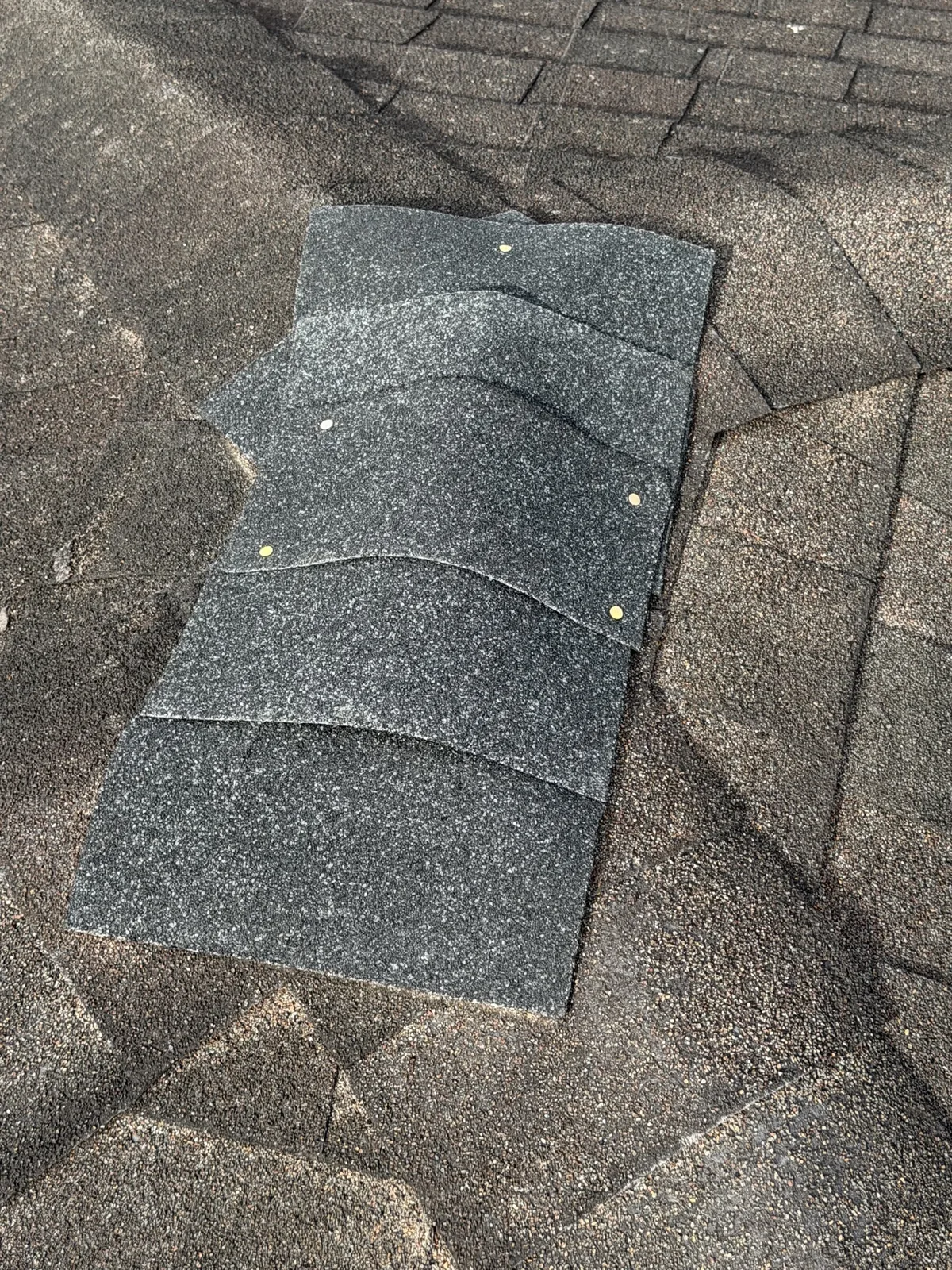
A close shingle inspection tells us whether damage is surface-level or functional.
The Telltales We Actually Look For
A real hail inspection isn't a quick glance. Here's the checklist we work through, roughly in the order we check them:
Bruised shingles
The main event. We run hands over the shingles feeling for soft spots — impacts that compressed the mat without tearing the surface. Fresh bruises show as dark circles where granules were knocked away. On older hail damage, those spots have weathered into brittle, cracked patches.
Granule piles in gutters and at downspouts
Knocked-off granules have to go somewhere, and they wash straight into the gutters. After a hailstorm, we check the gutters and the ground where downspouts discharge. Heavy granule buildup — it looks like coarse black sand — is one of the most reliable signs a roof took a beating, and you can spot it without ever climbing a ladder.
Dented vents, flashing, and gutters
Soft metals dent where shingles only bruise, so they act as a witness. Dented turbine vents, dimpled gutter runs, and pockmarked flashing tell us the hail was large enough and hard enough to damage the roof — and they show the direction the storm came from, which tells us which slopes took the worst of it.
Cracked or split ridge caps
Ridge caps sit at the highest point of the roof and take direct hits. Hail splits them along their fold lines, and split ridge caps are an open invitation for wind-driven rain.
Collateral damage around the house
Dented AC condenser fins, cracked skylight domes, pitted window screens, chipped paint on the fascia — collateral damage corroborates what we find on the roof. If the storm was strong enough to dent the condenser, the shingles didn't escape it.
What to Do in the First Days After a Hailstorm
- Note the date and time. Insurance claims reference the storm event, so write down when the hail fell and roughly how large the stones were. Photos of hail next to a coin work well.
- Photograph collateral damage from the ground. Dented gutters, damaged screens, pitted AC units — all of it, before anything gets repaired or replaced.
- Don't climb up yourself. Bruised shingles are fragile, steep roofs are dangerous after storms, and walking a damaged roof can make things worse. This is what we're for.
- Don't wait. Hail damage doesn't heal, and it doesn't stay stable — UV and heat keep working on every bruise. The sooner the roof is documented, the cleaner any claim or repair decision is.
- Call for a free inspection. We document everything with photos, tell you plainly whether the damage is real and functional, and put it in writing. If the roof is fine, we say so — plenty of storms look scary and do nothing.
How Insurance Companies View Hail Damage
Here's the part most homeowners don't know: insurers distinguish between functional damage and cosmetic damage. Functional damage — bruising that shortens the shingle's life or breaks its water-shedding ability — is what claims are built on. A few scuffed granules with the mat intact usually isn't.
Adjusters look for a consistent pattern: similar bruising across multiple slopes, matching collateral damage on vents and gutters, and a storm history that lines up. Random, isolated marks get questioned; a uniform pattern across the windward slopes doesn't.
We help homeowners through the claim process — documentation, meeting the adjuster, explaining the damage in the terms insurers use. What we won't do is promise an outcome. Nobody honest can guarantee what an adjuster will approve. What we can guarantee is that you'll know exactly what your roof looks like before anyone files anything. Our hail damage roofing page covers how we handle the repair side once a claim is decided.
When Repair Is Enough — and When It Isn't
Hail doesn't automatically mean a new roof. If the damage is confined to one or two slopes and the rest of the roof is healthy and young, targeted repairs — replacing the bruised shingles, resealing, addressing the flashing — can be the right call, backed by our 2-year transferable labor warranty.
Replacement starts making sense when bruising is widespread across most slopes, when the roof was already nearing the end of its service life before the storm, or when matching shingles are no longer available and a patchwork repair would look terrible and perform worse. When it's a close call, we show you both options side by side with honest numbers — our free roof inspection is where that conversation starts.