How Hail Actually Damages a Shingle
Most homeowners picture hail damage as holes punched through the roof. In reality, hail wounds shingles in a subtler way — and the subtlety is exactly what makes it expensive to ignore.
The bruise
A hailstone strike compresses the shingle at the impact point. The protective granules get knocked loose, and underneath, the fiberglass mat can crack or fracture. Roofers call this bruising, and the word is accurate: like a bruise, the damage is under the surface. The shingle may look almost normal from a few feet away while its waterproofing layer is compromised.
Granule loss
Those granules are not decoration — they shield the asphalt from UV. Where hail knocks them away, sunlight starts breaking down the exposed asphalt immediately. Check your gutters and downspouts after a hailstorm: piles of granules are one of the clearest signs the roof took hits, even when the shingles look fine from the driveway.
Cracked mats and split shingles
Larger hail, or hail driven by wind, can fracture the fiberglass mat outright or split the shingle. These are the strikes most likely to become leaks — but even fractured mats do not always leak right away. Water needs time and repeated rain to work through the damaged layers, which is why hail damage so often surfaces as a leak years after the storm everyone forgot.
Why You Cannot See It From the Ground
This is the central trap of hail damage. Wind damage announces itself — shingles in the yard, bare patches on the roof. Hail damage whispers. Bruises are felt more than seen; they show as slight soft spots or darkened impact marks that resolve only on close inspection, running a hand over the shingle or photographing at an angle.
That is also why “my roof looks fine” is the most expensive sentence in hail country. By the time hail damage becomes visible from the ground — widespread granule loss, curling around impact points — the roof has been deteriorating for seasons. A professional inspection after a hail event is the only reliable way to know.
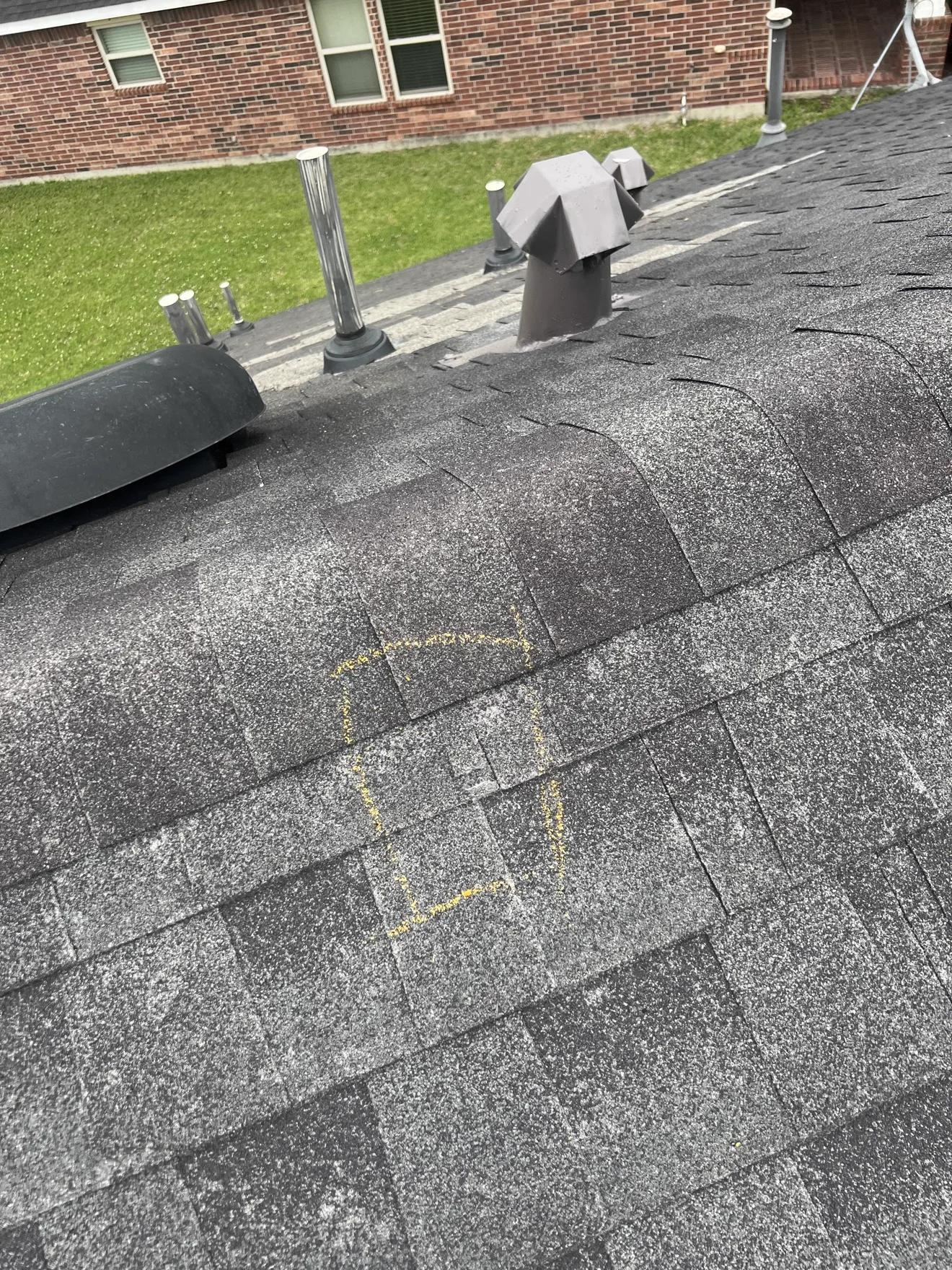
Chalk-marked hail damage on asphalt shingles.
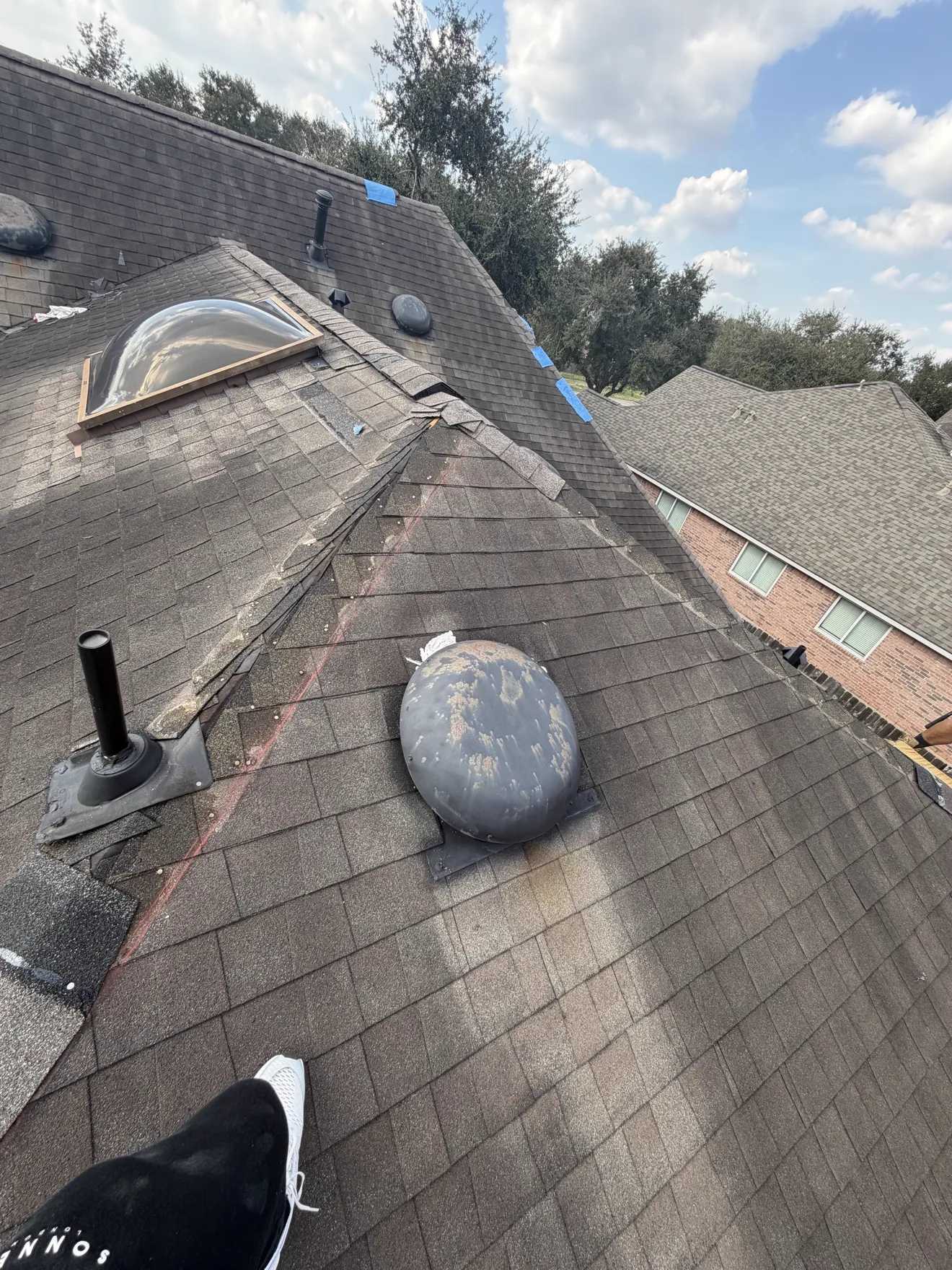
Storm damage marked with blue tape during an inspection.
Read the Collateral Damage
Shingles are not the only thing hail hits, and the other targets are often easier to read. When we inspect after hail, we check the whole property for corroborating evidence:
- Dented vents, flashing, and gutters. Soft metals dent where shingles bruise. Dented turtle vents or gutter aprons confirm the storm's direction and intensity.
- Damaged window screens and AC fins. Torn screens and flattened condenser fins tell the same story from lower on the house.
- Vehicles. Dented cars parked outside during the storm are independent confirmation of hail size.
- Granule piles. Gutters, downspout outlets, and the ground below valleys collect the granules hail knocked loose — measurable evidence of how many strikes the roof absorbed.
Adjusters look for this same collateral damage. Documenting it strengthens any claim, because it ties the roof's condition to a specific event.
Hail Size Changes the Math
Not all hail is equal. Pea-sized hail (around a quarter inch) mostly causes cosmetic granule displacement on healthy shingles. Quarter-sized hail (one inch) is where functional damage begins — bruising and mat fractures become common, and most manufacturer and insurance thresholds start here. Golf-ball-sized hail (1.75 inches and up) can split shingles, crack tile, and dent metal roofing.
Wind-driven hail hits harder than its size suggests, because the impact angle and velocity increase. And older, UV-brittled shingles bruise under hail that a newer roof would shrug off — another reason the roof's age matters in every hail assessment.
Repair or Replace After Hail?
It comes down to how many shingles are functionally damaged — bruised through the mat, not just cosmetically marked — and how they are distributed.
- Targeted repair fits when functional damage is confined to one slope or section and the rest of the roof tests sound. We replace the bruised shingles, verify the surrounding courses, and back the work with our 2-year labor warranty.
- Replacement fits when bruising is scattered across multiple slopes. Spot-repairing dozens of shingles across an entire roof costs nearly as much as replacement and leaves a patchwork of ages — and insurers generally recognize this math too.
Either way, the inspection comes first and it is free. We mark up photos showing exactly which shingles are damaged and why, so you are deciding from evidence, not salesmanship. If replacement is the answer, our roof replacement page explains the full process.
The Timing Trap
Hail damage has a cruel timeline. The storm passes, the roof looks fine, no leaks appear — so nothing happens. Meanwhile UV attacks the exposed asphalt at every bruise, granule loss accelerates, and the roof ages years in months. When leaks finally show up, the storm is a distant memory and the insurance deadline may have passed.
Two rules avoid the trap: inspect while the damage is fresh (hail marks weather and fade, becoming harder to prove), and know your policy's filing deadline — many require prompt notice, and some set hard time limits after the event. A free inspection now costs nothing; a missed deadline can cost a roof.
Hail and Your Insurance Claim
The hail claim process follows the same honest sequence as any storm damage claim: we document visible damage with photos and a written report, you file with your insurer, and we can meet the adjuster on site. We are not adjusters and cannot promise approval.
One hail-specific note: because bruising is subtle, adjuster inspections for hail take longer and benefit most from our documentation being in the adjuster's hands before they climb. Dented vents and granule piles — the collateral evidence — often do as much persuading as the shingle photos.