When Replacement Is the Right Call
Nobody wants to replace a roof that could have been repaired, and we do not sell replacements to people who do not need them. Our free inspection settles the repair-or-replace question with photos, not guesses. That said, there are clear signs a roof is done being repaired:
- Widespread granule loss. When shingles shed their protective granules across whole slopes — check your gutters and downspouts — the asphalt underneath is exposed to Texas UV and aging accelerates fast.
- Curling, cupping, or clawing shingles. Heat-aged shingles deform at the edges. A few can be replaced; when it is happening everywhere, the roof is telling you its time is up.
- Repeated leaks in different spots. One leak is a repair. New leaks appearing in new places, season after season, mean the system is failing as a whole.
- Soft or rotted decking across wide areas. If the wood under the shingles is compromised in multiple zones, patching the surface is cosmetic. The structure needs to be addressed.
- Age plus wear. In Fort Bend County heat, an asphalt shingle roof nearing the end of its expected service life with visible wear is a replacement candidate, not a repair project.
A failing roof can also complicate a home sale. Buyers and inspectors flag worn roofs immediately, and a new roof with a transferable 5-year labor warranty becomes a genuine selling point instead of a negotiation problem.
If the damage turns out to be isolated, we will tell you — our roof repair page covers what targeted repairs look like and what they cost.
What a Full Replacement Actually Includes
A proper replacement is a system, not just new shingles on top of old problems. Here is the sequence we follow on every job:
- Free inspection with photos. Roof surface, attic, flashing, vents, and gutters — documented so you see exactly what we see.
- Written estimate, one clear price. Materials, labor, and scope in writing before anything is scheduled. No allowances, no vague line items.
- Scheduling around your life. We agree on dates that work for you and confirm the day before.
- Tear-off down to the decking. Every old layer comes off so we can see the actual structure — no layering new shingles over hidden damage.
- Decking inspection and replacement. Every sheet gets checked; soft, rotted, or delaminated decking is cut out and replaced.
- Underlayment, flashing, and ventilation. New synthetic underlayment, water shield in valleys and at vulnerable transitions, fresh flashing, and proper vent details.
- Shingle or metal installation. Installed to manufacturer spec — nailing patterns, starter courses, ridge caps — because the details are what make a roof last.
- Cleanup, magnet sweep, and final walkthrough. Landscaping protected during the job, nails collected with a rolling magnet, and we walk the finished roof with you.
- Warranty paperwork. The written 5-year labor warranty, signed and in your hands.
Tear-Off and Decking: What Lies Beneath
The most important part of a replacement is the part you never see again: the decking. Some contractors offer to lay new shingles over the old roof to cut the bid. It is cheaper on paper, but it hides everything — soft spots, rot, previous bad repairs, inadequate ventilation damage — and adds weight the structure was not designed to carry twice. We tear off to the decking on every replacement.
Once exposed, we walk every sheet. Plywood or OSB that is soft, spongy, delaminated, or rotted gets cut out and replaced with new decking. This is also when we find the surprises old roofs hide: improper previous repairs, decking gaps, or water paths that never showed inside the house. Fixing the structure now is what makes the next twenty-plus years possible.
Underlayment, Flashing, and Ventilation
Shingles shed water; the layers beneath them manage it. Getting these details right is the difference between a roof that lasts and one that leaks in year six:
Underlayment
We install synthetic underlayment across the full deck — it lies flatter, resists tearing in Gulf winds during installation, and sheds incidental moisture far better than old felt paper. Valleys and vulnerable transitions get a self-adhering water shield for backup protection where water concentrates.
Flashing
Step flashing at walls, counter-flashing at chimneys, new pipe boots, and drip edge at the eaves and rakes — all replaced, not reused. Reusing old flashing on a new roof is one of the most common shortcuts we see, and one of the most common sources of early leaks.
Ventilation
A roof needs balanced airflow: intake at the soffits, exhaust at the ridge or roof vents. Poor ventilation superheats the attic in Texas summers, cooking shingles from below and shortening their life. During replacement we verify intake and exhaust are balanced and correct them where they are not.
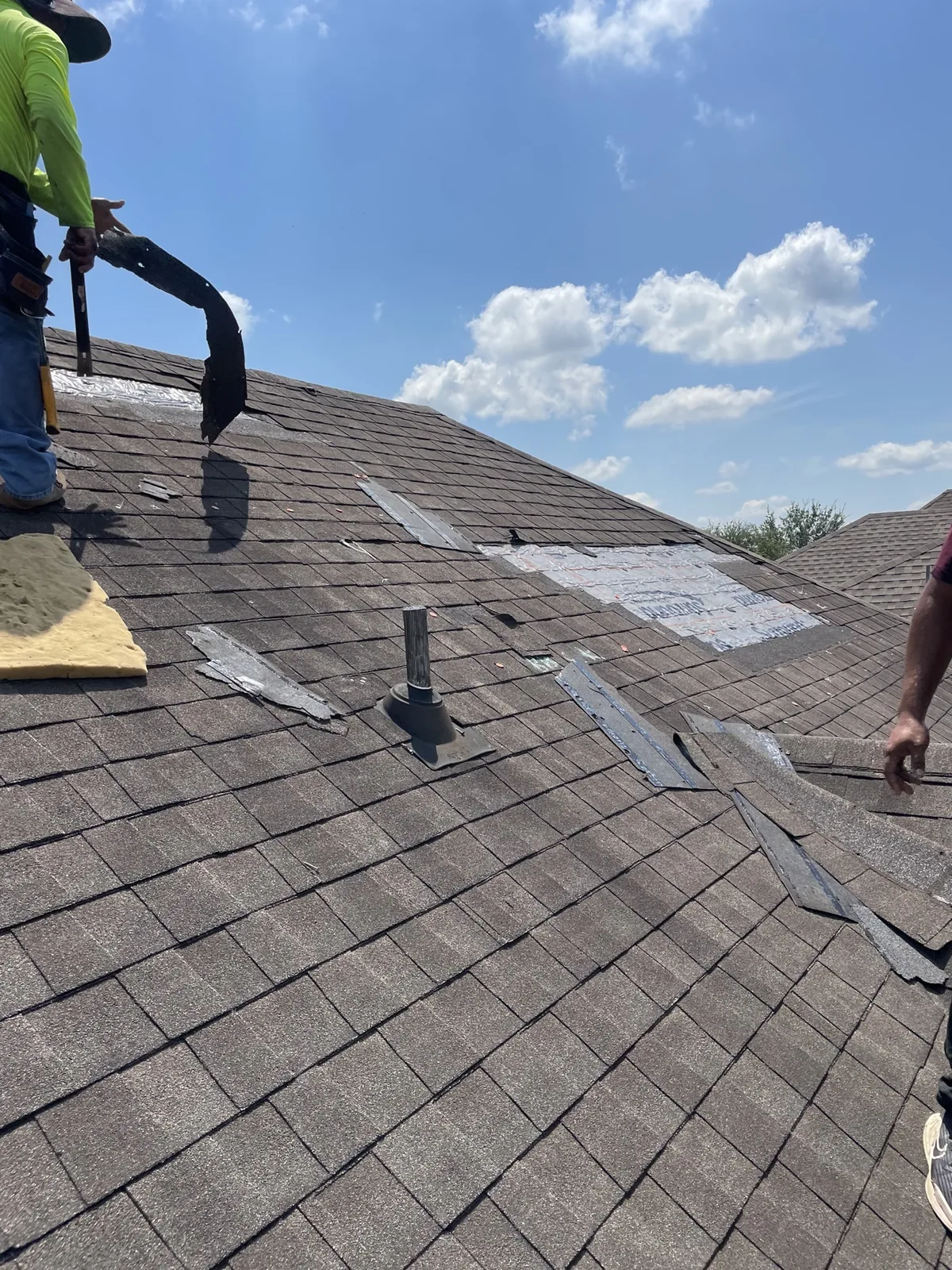
Tear-off in progress during a full roof replacement.
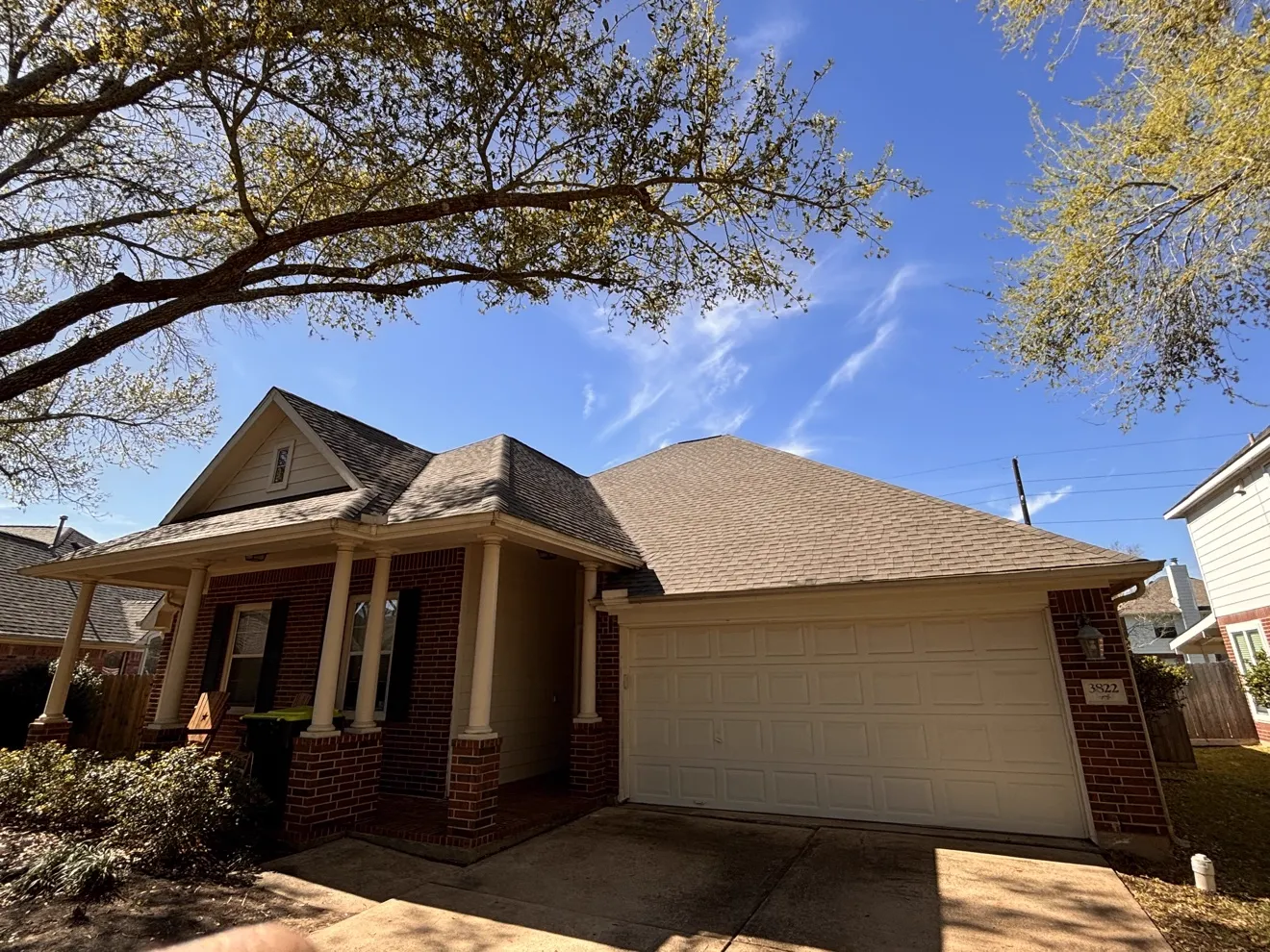
A finished replacement: clean lines, new ridge caps.
Architectural Shingles vs. Metal: Honest Tradeoffs
We install both, and we do not push one over the other. Here is how they actually compare for a Fort Bend County home:
Architectural asphalt shingles
The most common choice in our area, and for good reason. They balance cost, appearance, and dependable performance in Texas weather. Dimensional shingles handle wind well when installed to spec, and a wide range of colors suits most neighborhoods and HOAs. Expect a solid couple of decades of service in our climate with the 5-year labor warranty backing the workmanship.
Metal roofing
A larger up-front investment with a much longer service life and excellent resistance to wind, hail, and fire. Metal sheds water fast, reflects heat, and stands up to Gulf storms that punish lesser materials. The tradeoffs: higher initial cost, a different look that does not suit every HOA, and installation that demands a crew experienced with metal details — which we are.
The right choice depends on your budget, how long you plan to stay, your HOA, and the house itself. We walk through both with real numbers for your roof, not a sales pitch.
Cleanup and the Magnet Sweep
A tear-off makes a mess — anyone who tells you otherwise has never done one. What matters is how the mess is managed. We protect landscaping and siding with tarps before the first shingle comes off, run a rolling magnet across the yard and driveway for stray nails, and do a final walkthrough with you before we call the job done. If you find a nail we missed, call us and we will come get it.
The Written 5-Year Labor Warranty
Every full replacement carries our 5-year labor warranty, in writing, as part of your contract. If our workmanship fails within five years, we come back and make it right — no fine print games. The warranty is separate from the shingle manufacturer's own material warranty, and it transfers to the new owner if you sell your home, which buyers and their inspectors like to see.
What Drives the Cost of a New Roof
Every roof is different, so we do not quote blind over the phone. Your written estimate explains the work and the factors behind your price:
- Roof size — total squares of roofing area.
- Pitch and complexity — steep slopes, valleys, dormers, and hips take more labor and material.
- Material choice — architectural shingles vs. metal.
- Number of old layers and decking condition — more tear-off and more decking replacement means more work.
- Access, flashing, and ventilation details — chimneys, skylights, wall transitions, and vent corrections.
What you will not find in our estimate: vague allowances, surprise add-ons mid-job, or pressure to sign today. If storm damage is involved, our storm damage page explains how documentation and insurance-claim help work — we document honestly and never promise what an insurer will approve.