What a Free Inspection Actually Covers
A lot of “free inspections” are a quick glance from the driveway followed by a sales pitch. Ours is the opposite: a methodical look at the whole roofing system, documented with photos, so you can see exactly what we see.
The roof surface
We look at shingle condition across every slope — missing, lifted, cracked, or curling shingles, granule loss, hail bruising, and algae or moss growth. On tile or metal roofs we check for cracked tiles, slipped panels, loose fasteners, and failing sealants. The surface tells us how the roof is aging and where weather has done its worst.
The attic
The underside of the roof often reveals more than the top. From inside the attic we look for water stains on the decking, damp insulation, daylight showing through gaps, and signs of poor ventilation — trapped heat and moisture that quietly shorten a roof’s life in Texas summers. Attic access does require someone home or a prearranged entry point.
Flashing, valleys, and penetrations
Most leaks we find start here, not in the middle of a shingle field. We inspect step flashing along walls, valley metal, chimney and skylight flashing, vent pipes and their rubber boots, and every penetration where something passes through the roof. Rusted, lifted, or dried-out flashing is one of the most common — and most fixable — problems we document.
Gutters and drainage
Clogged or sagging gutters push water back under the roof edge and against the fascia. We check that gutters are clear, firmly attached, and draining away from the foundation, because drainage problems show up as roof problems.
Vents and ventilation
Ridge vents, box vents, turbines, and soffit intake all get a look. Blocked or unbalanced ventilation cooks shingles from below and invites moisture damage in the attic. It is an easy thing to overlook and an expensive thing to ignore.
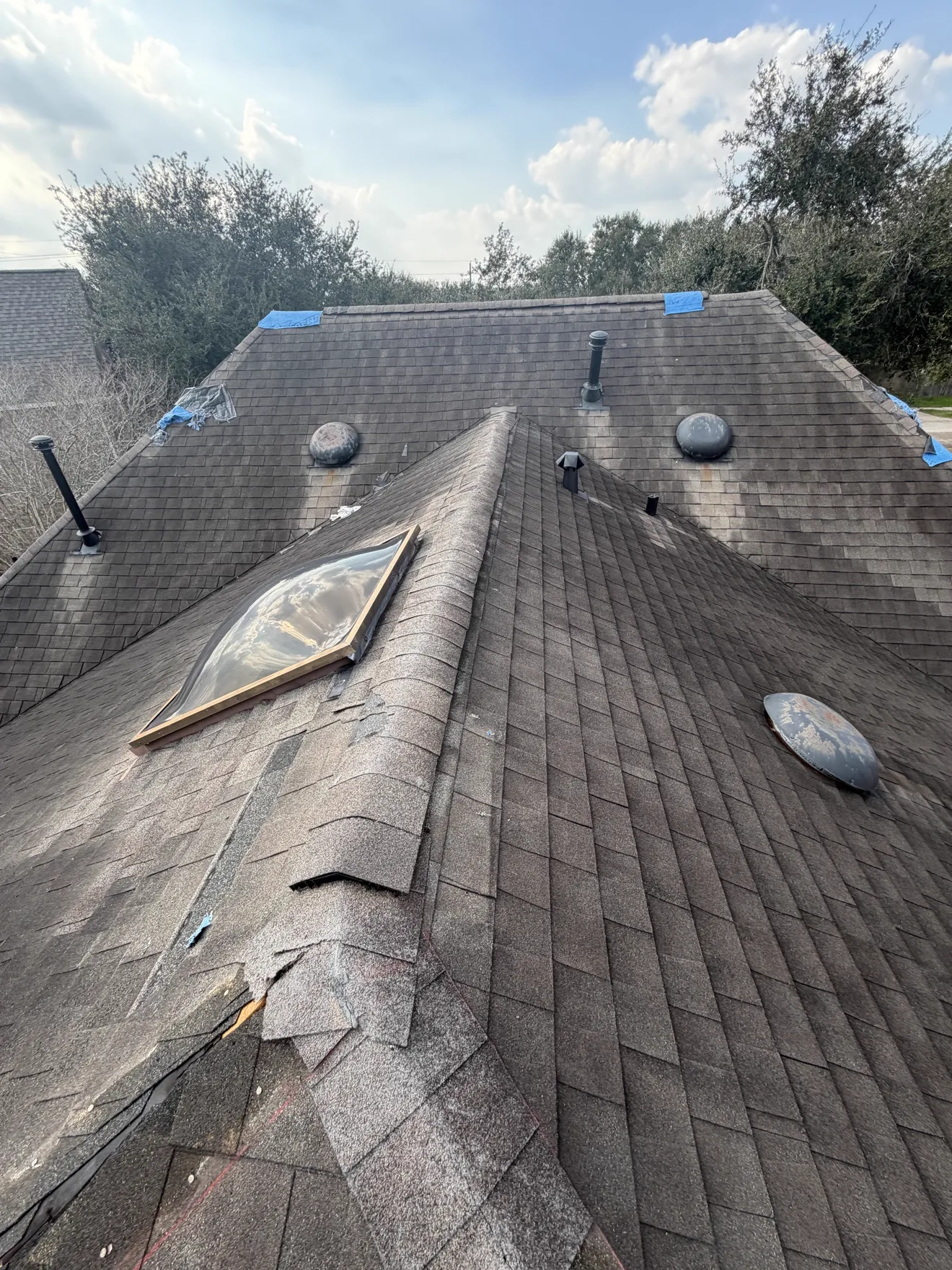
Damage areas marked during a free roof inspection.
Drone vs. Walking the Roof
We walk the roof wherever it is safe to do so — nothing replaces hands-on feel for soft decking, loose shingles, or brittle flashing. But some roofs should not be walked: steep pitches, fragile tile, or storm-weakened sections. That is where the drone earns its keep. It photographs ridges, valleys, and far slopes in high resolution without putting weight on a compromised surface, and the photos go straight into your report.
Drone-only inspections miss things. Walk-only inspections miss things. We use both, matched to your roof.
When to Get Your Roof Inspected
You do not need to wait for a leak. The best inspections happen before water ever gets in:
- After a major storm. Hail and wind damage is often invisible from the ground, and insurance timelines are time-sensitive. A prompt inspection documents what the storm actually did.
- When buying or selling. Know what you are buying before you close — or fix issues before a buyer’s inspector finds them. Our written report works for both sides of the table.
- Once a year. Our free annual checkups exist for exactly this: Fort Bend County sun, hail, and hurricane-season rain punish roofs year-round, and a yearly look catches small problems before they become leaks.
- When you notice a warning sign. Water stains on a ceiling, shingles in the yard after wind, or granules collecting in a gutter all deserve a closer look sooner rather than later.
What You Receive After the Inspection
You keep a plain-English findings report with photos — yours to keep whether or not you hire us. If work is needed, the report includes or is followed by a written estimate with the scope and price spelled out. Repairs carry our 2-year labor warranty and full replacements our 5-year labor warranty, and both transfer if you sell the home.
If the roof is healthy, the report says so, and that is the end of it. A meaningful share of our inspections end with “you’re in good shape — see you at the annual checkup.” We would rather earn your call later than sell you work now.
Free Annual Roof Checkups
Texas weather does not take years off, so neither do we. Our free annual checkup revisits the roof surface, flashing, vents, and gutters once a year, with drone photos where useful. If everything looks good, you get peace of mind for another year. If something has changed, you catch it while it is small and cheap. There is no enrollment and no catch — just call once a year.