The Stain Is the Last Stop, Not the First
Water gets in through a damaged shingle, cracked flashing, or worn pipe boot — then it travels. By the time it shows up as a brown ring on your ceiling, it may have run ten feet or more from where it entered. The stain tells you water arrived. It tells you almost nothing about where it got in.
That single fact explains most of the money wasted on roof leaks: people fix what they can see, which is rarely the actual problem.
The Path Water Takes
On a typical asphalt shingle roof, the journey looks like this:
- Shingles — water slips under a damaged shingle, lifted flashing, or cracked boot.
- Underlayment — runs along the water-resistant layer beneath the shingles.
- Decking — soaks into or sheets across the wooden deck.
- Rafters — follows the framing downhill, away from the entry point.
- Insulation — saturates quietly. You see nothing yet.
- Ceiling — the stain appears, often far from the source.
Gravity and slope decide the route, not the floor plan below. The stain in your hallway can easily originate at a vent pipe ten feet away.
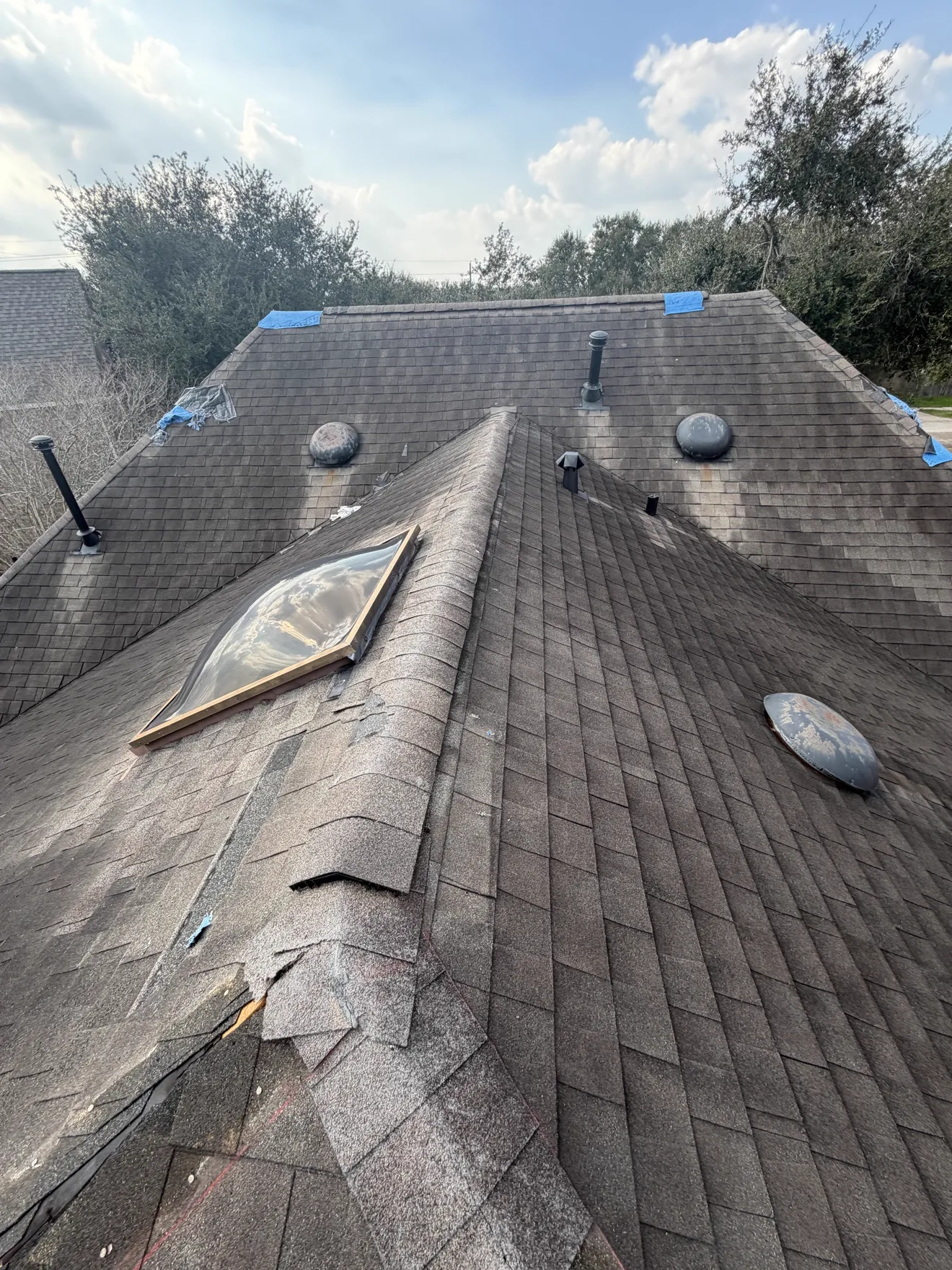
Marked problem areas found during an inspection — the entry point is rarely above the stain.
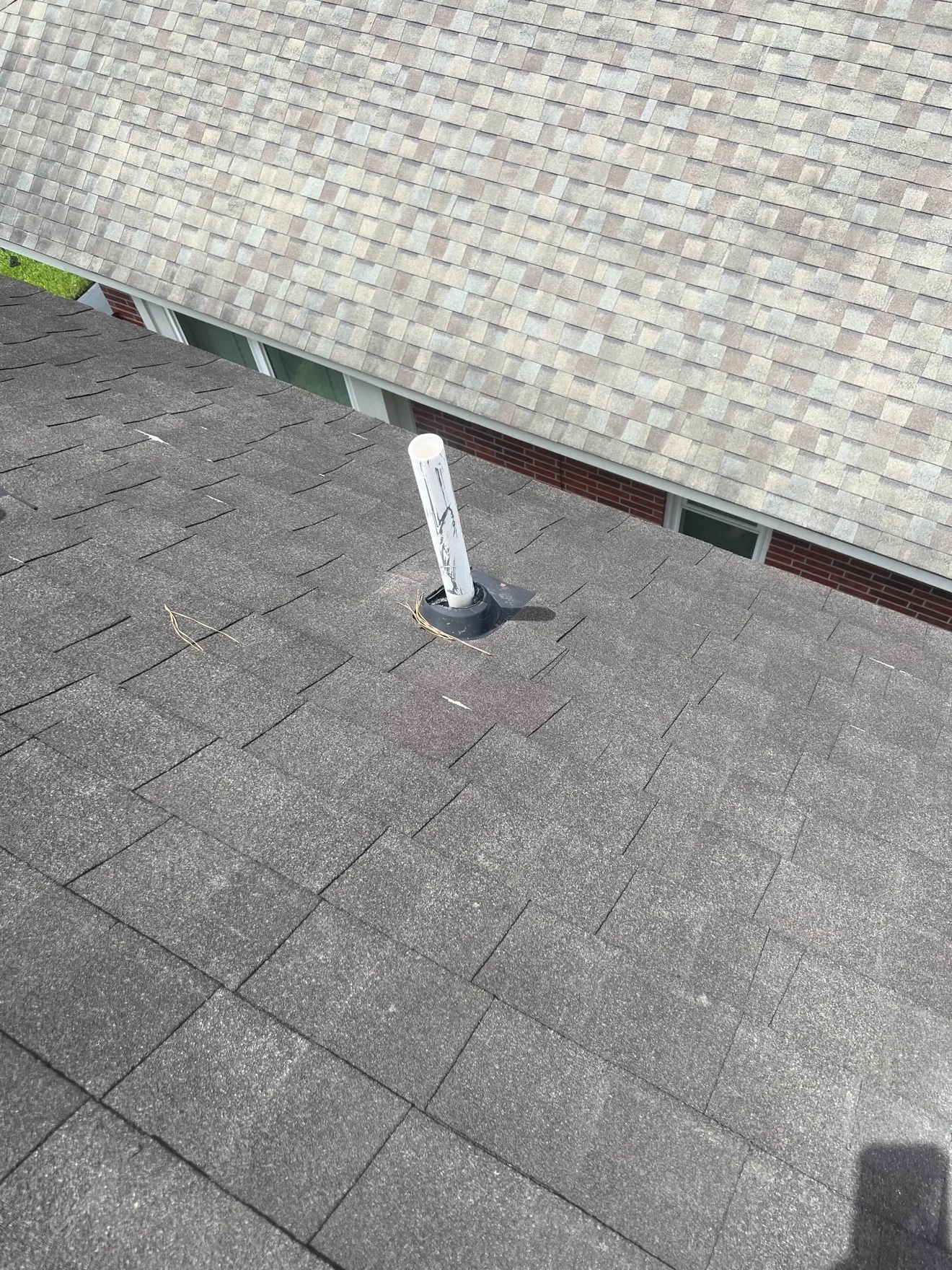
A worn pipe boot — one of the most common entry points we trace leaks to.
Why Patching the Stain Fails
Caulking around the stain, repainting the ceiling, or sealing the nearest shingle treats the symptom. The entry point keeps feeding water, the decking keeps rotting, and the next heavy rain brings the stain back — usually bigger. Every month a leak runs hidden, the repair gets more expensive: decking, then insulation, then drywall, and sometimes mold remediation on top.
The Usual Entry Points
Most leaks we trace come from a short list. The common thread is penetrations and transitions — not the middle of a shingle field:
- Pipe boots — cracked rubber seals around vent pipes
- Flashing — rusted or lifted step flashing at walls, chimneys, and valleys
- Valleys — debris buildup holding moisture against shingles
- Ridge caps — cracked caps along the roof's highest stress line
- Nail pops and skylight seals — small failures, steady drips
What a Real Leak Diagnosis Looks Like
Finding the source is a process, not a guess:
- We listen first. When the leak appears — only in heavy rain, every rain, after wind — narrows the suspects before anyone climbs a ladder.
- We check the attic. Water paths on decking and damp insulation map the route from the inside, which is often more revealing than the roof surface.
- We inspect the roof system. Shingles, flashing, valleys, ridges, boots, and penetrations — each gets a look, with photos of everything we find.
- We show you the source. The actual entry point, in photos, explained in plain language — not a vague area and a shrug.
Our free roof inspection works exactly this way. And when the diagnosis points to work, our roof repair page covers what happens next — including how we show you repair and replacement options side by side.
When It Is an Emergency
Water actively entering your home — dripping, streaming, or pooling — is an emergency. Call any time; active leaks jump ahead of scheduled work. A slow stain with no active dripping can usually wait for a scheduled inspection, but do not ignore it: slow leaks rot decking quietly, and quiet is expensive.