Not a Sales Pitch: What an Inspection Actually Is
A professional roof inspection is a diagnostic visit. Somebody who reads roofs for a living examines your roof system — surface, structure, and drainage — documents what they find with photos, and tells you plainly what it means. That's the whole job.
It is not a sales call wearing a ladder. You should never feel pressured to decide anything on the spot, and you should always receive the findings in writing. If an “inspection” ends with a contract shoved at you and no photos to show for it, that wasn't an inspection.
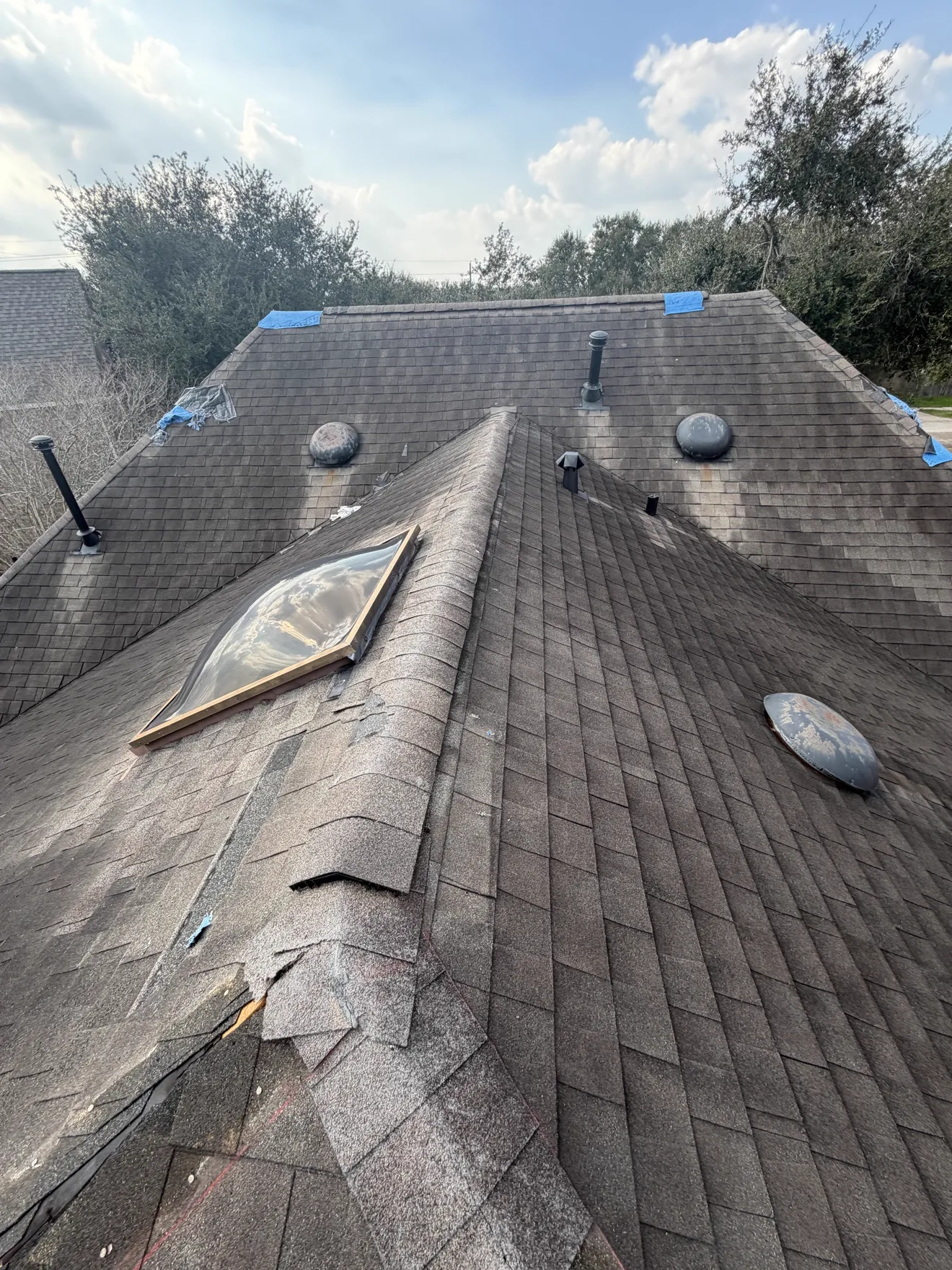
A full inspection covers the entire roof system — not just the shingles you can see from the street.
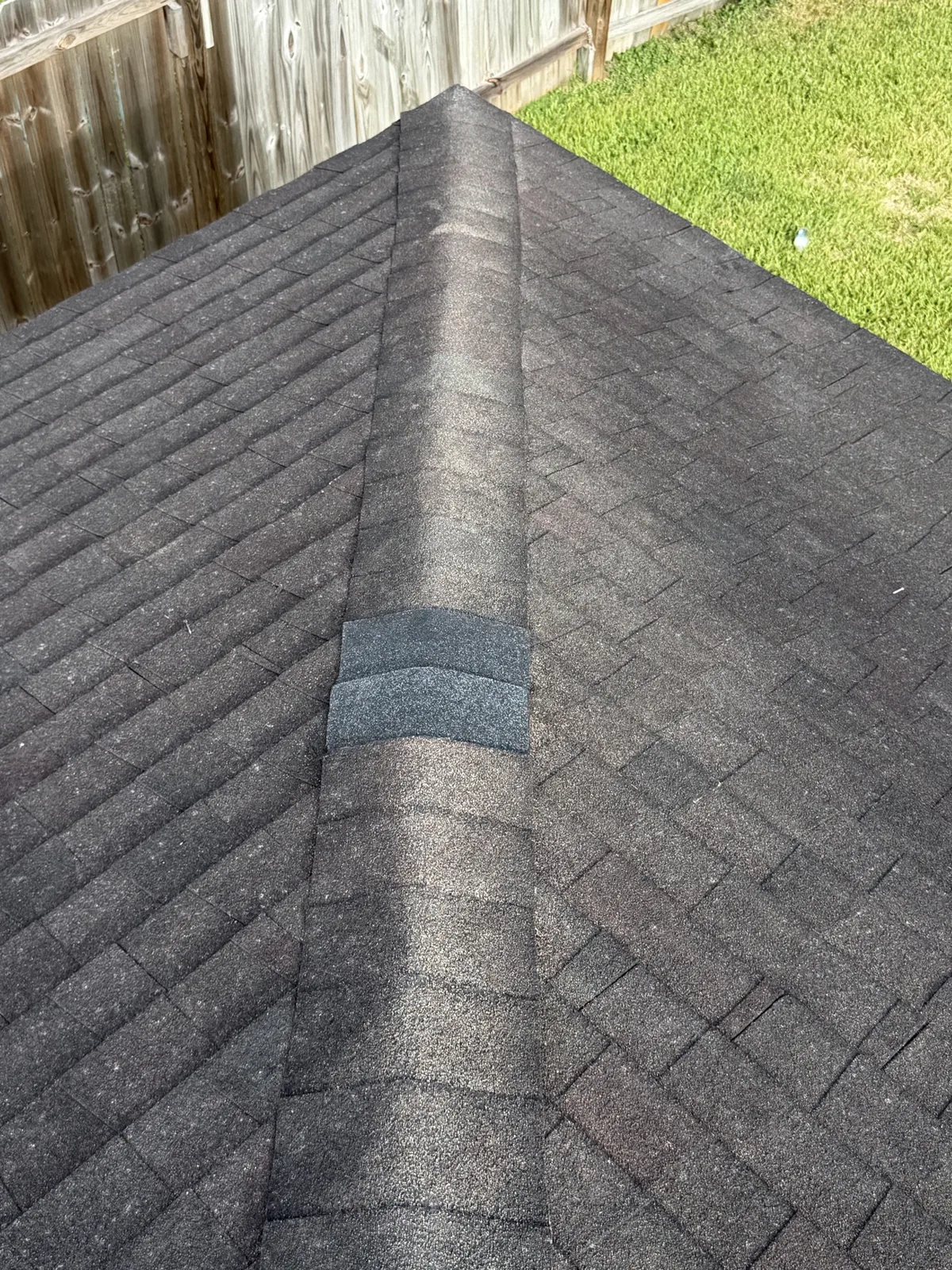
Ridge caps, flashing, and penetrations get a close look — most leaks start at the details.
What We Check on the Roof
We work across the whole surface, slope by slope, because damage is rarely evenly distributed — wind and hail hit one side harder, and sun exposure varies. On the surface we check:
- Shingles: missing, lifted, cracked, or bruised shingles; granule loss; curling or blistering from heat
- Flashing: step flashing at walls, chimney flashing, and drip edge — rusted, lifted, or improperly sealed flashing is one of the most common leak sources we find
- Valleys and ridges: the highest-wear areas on any roof, checked for cracks, debris buildup, and wind damage
- Penetrations: pipe boots, vents, skylights, and anything else poking through the roof — cracked rubber boots alone cause a remarkable number of leaks
- Previous repairs: old patches and sealant jobs, checked to see whether they're holding or failing
What We Check Inside: The Attic
The attic tells the truth about the roof. Water stains on decking, damp insulation, daylight where it shouldn't be, and rusted nail heads all map problems the surface hides. We also check ventilation — in Texas heat, a poorly ventilated attic cooks shingles from underneath and shortens their life. The attic visit is quick, and it often reveals more than the roof walk.
Gutters, Drainage, and the Drone
We check gutters and downspouts for granule buildup (a sign of shingle wear or hail), sagging, and drainage that dumps water against the foundation. Then the drone goes up for the areas boots can't safely reach — steep pitches, fragile tile or old shingles, and high ridges. Drone photos give you the same view we have, which matters when we're explaining what we found.
How Long It Takes and What You Get
A typical residential inspection takes under 90 minutes, most of it on the roof and in the attic. You don't need to follow us around — though you're welcome to — and you don't need to prepare anything. If you know the roof's age or have noticed a stain or drip, telling us upfront helps us focus.
Afterward you receive three things:
- Photos of everything we found, good and bad
- Written findings in plain language — what's fine, what needs attention, and what can wait
- A written estimate if work is needed, with the scope and price broken down before anything starts
No obligation, no follow-up pressure. The report is yours whether you hire us or not.
When to Schedule One
- After any significant storm — hail, high wind, or hurricane-season downpours. Damage is cheapest to address early.
- Once a year, regardless — our free annual checkups exist for exactly this. Small issues caught yearly never become big ones.
- When buying or selling — know what you're getting into, or give buyers one less thing to flag.
- When something seems off — a new ceiling stain, granules in the gutters, a shingle in the yard after wind. Trust the signal.
Storm Inspections vs. Annual Checkups: Different Jobs
Not every inspection has the same purpose, and it helps to know which one you're getting. A storm inspection is focused and urgent: did this specific event damage the roof, where, and how badly? We document impact patterns, collateral damage, and anything that needs immediate attention — the kind of report an insurance adjuster can work from.
An annual checkup is broader and calmer: how is the whole system aging, what's wearing faster than it should, and what small maintenance — resealing a vent, clearing a valley, replacing a cracked boot — prevents a leak next season? Our free annual checkups exist because a roof looked at every year almost never surprises its owner. Both are free. Both come with photos and plain-language findings.
Our No-Pressure Promise
Here's the part that surprises people: a meaningful share of our inspections end with “your roof is fine.” If there's nothing wrong, we say so, show you the photos proving it, and leave. We'd rather be the company that told you the truth than the one that sold you a roof you didn't need — because the second time you need a roofer, you'll call the first company.
Ready when you are: our free roof inspection page has the details, or just contact us and we'll set a time.