The Three Things That Decide It
Forget rules of thumb you read online. The repair-or-replace decision comes down to three honest questions:
- How widespread is the problem? One bad valley is a repair. Worn shingles on every slope is a replacement.
- How old is the roof, really? A 10-year-old architectural shingle roof in Sugar Land has a lot of life left — Texas sun is brutal, but quality shingles are built for it. A 20-plus-year-old roof with curling and granule loss is telling you something.
- What are your plans for the home? Staying twenty years changes the math versus selling next spring.
Everything below is just those three questions applied to real situations we see every week.
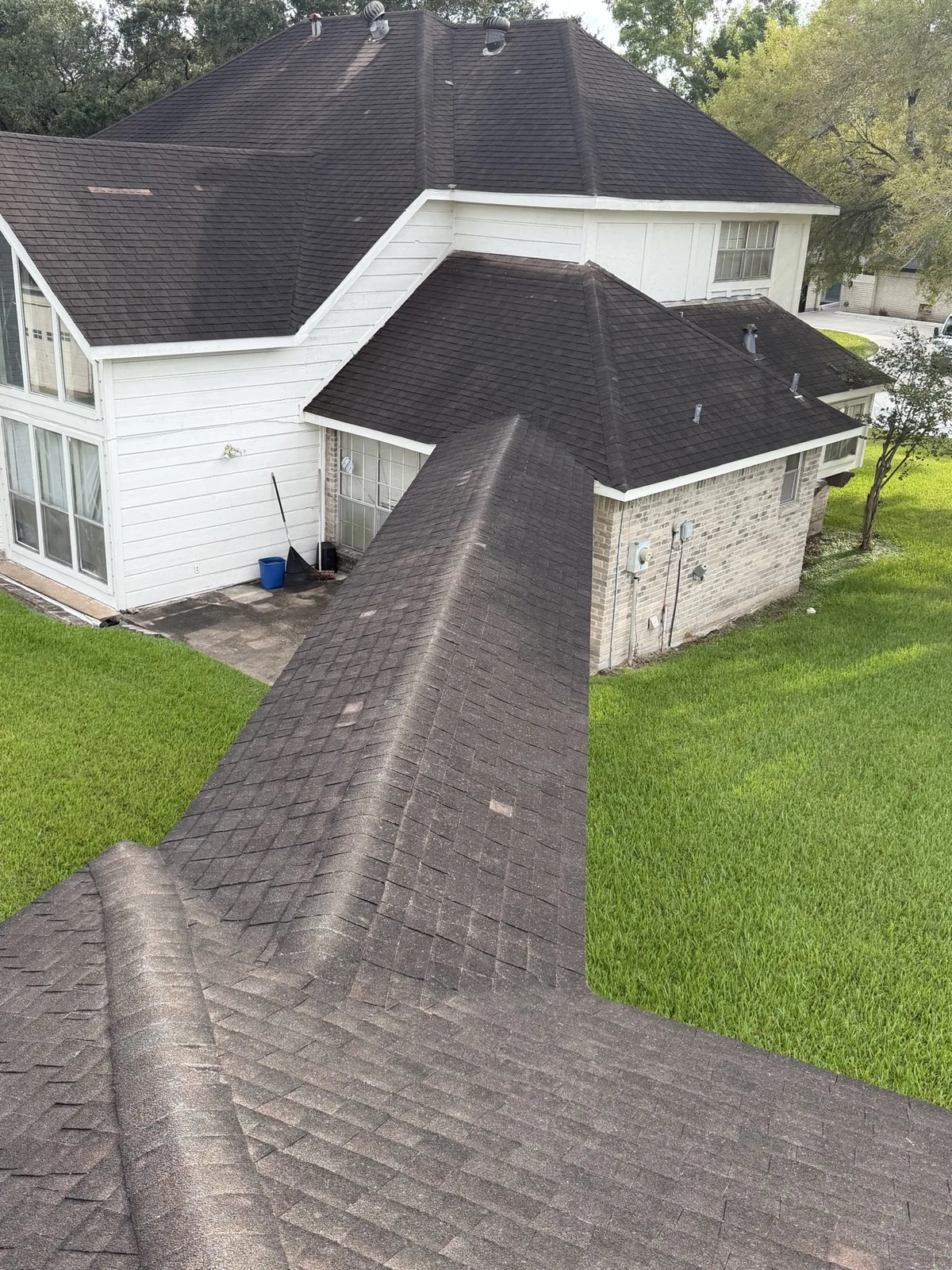
Evaluating a roof: isolated damage points toward repair; wear everywhere points toward replacement.
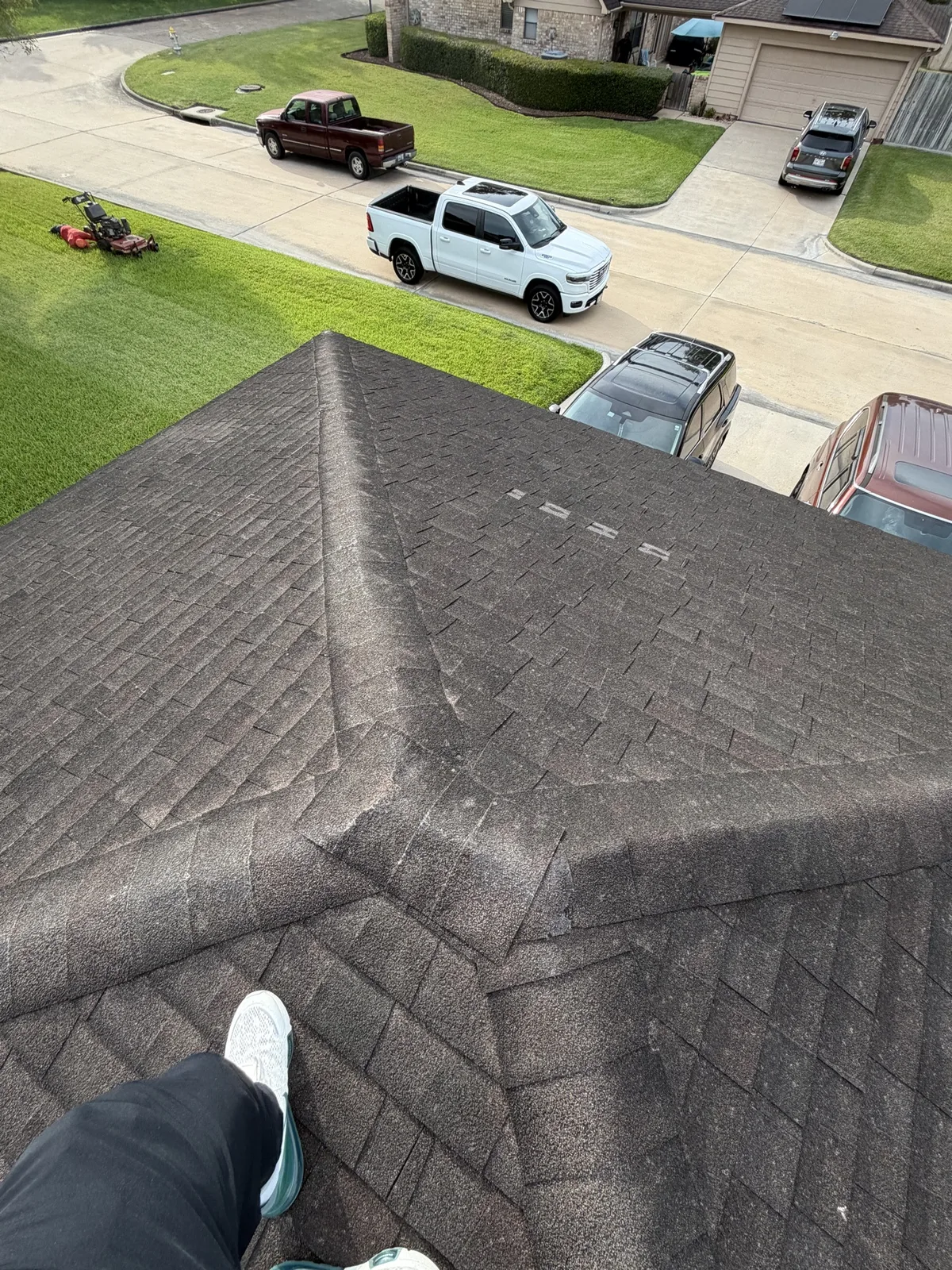
Documented roof condition before the homeowner chose a full replacement.
When Repair Is the Right Call
Repair is the smart money when the damage is isolated and the rest of the roof is healthy. The classic cases:
- A single leak traced to one pipe boot, vent, or flashing failure
- Wind-lifted shingles on one slope after a storm, with the surrounding roof intact
- A cracked ridge cap or a worn valley while the field shingles still have years left
- A roof well within its expected service life with one clear, fixable problem
Here's our rule: if we can fix the actual problem — not mask it — and the surrounding roof will outlast the repair, repair wins. Every repair we do carries our 2-year labor warranty, in writing, transferable if you sell. A repair that costs a fraction of replacement and genuinely lasts is never the wrong answer.
One caveat we tell people straight: if matching shingles are discontinued, a repair can look patchy. We'll show you the closest match before any work starts so there are no surprises. Details are on our roof repair page.
When Replacement Wins
Replacement stops being a sales pitch and starts being honest advice when several of these show up together:
- Widespread wear: granule loss, curling, or brittleness across most slopes — not one bad spot, but the whole system aging out
- Repeat leaks in different places: fix one, another appears next season — the roof is failing as a system, not at a point
- Decking issues: soft or rotted decking in multiple areas means the structure under the shingles is compromised
- Near end of life: a roof that's simply used up its years — repairing it is renting time at an increasing price
- Major storm damage across slopes: widespread hail bruising or wind damage where patching would cost nearly as much as starting over
There's also a math point most homeowners miss: three separate repairs over three years can easily exceed what one replacement would have cost — and you still end up with an old roof. When the pattern says “systemic,” we say so plainly. Our roof replacement page walks through the full process.
What Drives the Cost Either Way
We don't quote blind over the phone, and you should be skeptical of anyone who does. But it helps to know what actually moves the number:
- Size and pitch: bigger and steeper means more material, more labor, more safety setup
- Tear-off layers: how many old layers come off, and what the decking looks like underneath
- Decking condition: rotted or soft decking gets replaced — you can't build a new roof on bad wood
- Material choice: architectural shingles are the standard here; upgrades change the number
- Details: valleys, flashing, vents, skylights — the complex parts cost more than the flat runs
- Access: tight lots, landscaping, and multi-story heights all add labor
Your written estimate breaks all of this down before we start. No “we found more” without your approval.
How We Show You Both Options
When it's a close call — and it often is — we don't pick for you. We put both options side by side in writing: what the repair covers and its warranty, what the replacement includes and its warranty, and the honest lifespan we'd expect from each. Then we answer questions and leave the decision with you.
Nobody wants to replace a roof that could have been repaired, and we don't sell replacements to people who don't need them. That restraint is part of why our reviews read the way they do.
Selling Your Home? Read This.
If a sale is on the horizon, the math shifts. Buyers and their inspectors flag old roofs fast — it's one of the most common negotiation points in Fort Bend County transactions.
Two things work in your favor with us: our 5-year labor warranty on new installs and our 2-year labor warranty on repairs are both transferable to the buyer. A transferable warranty on a recent roof is a genuine selling point, not a gimmick — it tells the buyer's inspector the roof is somebody's responsibility. If you're deciding between repairing before listing or replacing, call us and we'll talk through which one actually helps the sale.